







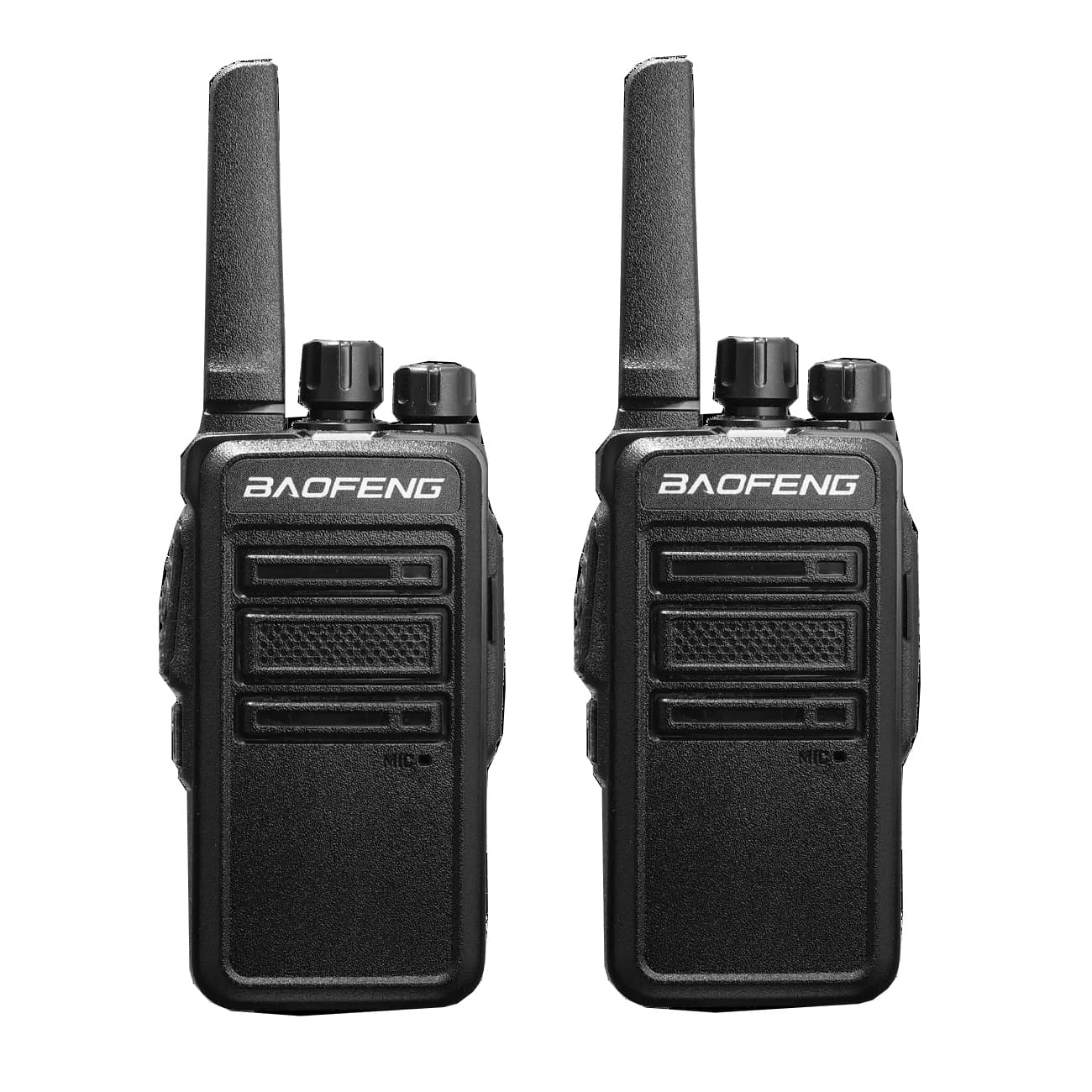
 Public Mobile Radio (PMR)
PMR446 Walkie Talkies in India: 10 Things You Should Know Before BuyingWalkie talkies are one of the easiest ways to keep a team connected without depending on mobile networks, SIM cards, internet, or call connectivity. For hotels, schools, warehouses, factories, security teams, events, construction sites, farms, and trekking groups, they offer fast push-to-talk communication when coordination matters.However, in India, not every walkie talkie can be used freely. Radio communication is regulated, and only specific low-power devices can be used without a separate user licence when they follow the permitted technical limits.This is where PMR446 walkie talkies become important.PMR446 refers to Personal Mobile Radio devices operating in the 446 MHz band. In India, the licence-exempt PMR446 range is associated with 446.0–446.2 MHz and a power limit of 500 mW e.r.p., as specified under the low-power short-range radio frequency device exemption rules.Below are the 10 most important things you should know before buying or using a PMR446 walkie talkie in India.1. What Is PMR446?PMR446 means Personal Mobile Radio at 446 MHz. It is used for short-range, push-to-talk voice communication between handheld radios.Unlike mobile phones, PMR446 walkie talkies do not need:SIM cardsRecharge plansMobile towersInternet connectionApp installationYou simply press the PTT button, speak, and other radios set to the same channel can hear the message instantly.PMR446 walkie talkies are commonly used by:Security teamsHotels and resortsSchools and collegesWarehousesFactoriesParking teamsEvents and exhibitionsTrekking and camping groupsConstruction sitesSmall business teamsThey are popular because they are simple, cost-effective, and suitable for quick team communication within a limited area.2. PMR446 Walkie Talkies Are Short-Range DevicesMany buyers assume that every walkie talkie can cover 5 km, 10 km, or even 15 km. In real-world conditions, range depends heavily on the environment.A PMR446 radio may perform better in open areas, but the range can reduce inside buildings, basements, factories, crowded markets, malls, warehouses, and city locations due to walls, concrete, metal racks, vehicles, machinery, and electrical interference.Location TypeExpected PerformanceOpen groundBetter rangeCity areaReduced rangeInside buildingDepends on walls and floorsBasementUsually limitedFactory or warehouseDepends on metal structures and machineryHilltop or open fieldCan perform betterPMR446 should be seen as a short-range coordination tool, not a replacement for mobile phones, repeaters, or licensed long-distance radio systems.3. Licence-Free Does Not Mean Rule-FreeThis is one of the most important points for Indian buyers.A PMR446 walkie talkie may be used without a separate user licence only when it follows the permitted technical limits. The device must operate within the approved frequency range and power limit, and should be suitable for short-range peer-to-peer communication.India’s exemption rules mention 446.0–446.2 MHz, 500 mW e.r.p., and channel spacing of 6.25 kHz and 12.5 kHz for PMR 446 MHz devices.So, before buying a walkie talkie, do not check only the design, price, or claimed range. Always check:Frequency rangeOutput powerWPC/ETA compliance informationSeller credibilityIntended use case4. Avoid High-Power Radios Without Proper PermissionMany imported or programmable VHF/UHF radios available online support higher output power such as 2W, 5W, 8W, or more. These products may look attractive because sellers often advertise “long range” performance, but they may not be suitable for general licence-free use in India.Using non-compliant or incorrectly programmed radios can create interference for licensed users, commercial networks, emergency communication systems, or other regulated radio services.For normal use in hotels, schools, warehouses, events, offices, shops, farms, and security teams, it is safer to choose a compliant PMR446 model instead of using high-power programmable radios without proper approval.5. Check the Frequency Before BuyingBefore purchasing any walkie talkie, check the technical specification carefully.For PMR446 use in India, the frequency should be listed around:446.0–446.2 MHzAvoid vague product listings that only say:“Long range walkie talkie”“Professional wireless set”“Outdoor communication radio”“High-power intercom device”A reliable product listing should clearly mention:Frequency bandOutput powerChannel detailsBattery capacityCharging methodCompliance or approval informationWarranty detailsIntended usage categoryIf frequency and power details are missing, do not assume the device is licence-free.6. Compliance and Certification Matter in IndiaFor Indian buyers, especially businesses and bulk buyers, compliance should be treated seriously.Licence-exempt use does not automatically mean every device can be imported, sold, or used commercially without proper documentation. For wireless equipment, WPC/ETA-related approval may be relevant depending on the product category, import status, and sale conditions.This is especially important for:BusinessesSecurity agenciesHotelsSchoolsFactoriesWarehousesGovernment supplyE-commerce sellersBulk buyersBuy from a seller who can provide proper product details, invoice, warranty support, and compliance-related information.7. PMR446 Is Best for Team CoordinationPMR446 radios are useful when a team needs instant communication during daily operations.For example:A hotel reception team can contact housekeeping instantly.A warehouse dispatch team can coordinate with packing staff.A school security guard can communicate with the admin office.An event manager can coordinate parking, entry gates, stage, and backstage teams.A retail store team can manage billing, stock, and floor support quickly.The biggest advantage is speed. There is no need to dial a number, wait for call connection, or depend on mobile network coverage.8. Channels and Privacy Codes Are Not Full PrivacyMany walkie talkies come with channels and privacy code features such as CTCSS or DCS. These features help reduce unwanted noise and allow different teams to use different settings.However, privacy codes do not make communication fully private or encrypted. They mainly filter what your radio hears. Another radio using the same frequency and correct settings may still receive the transmission.Avoid sharing sensitive information on normal PMR446 radios, such as:PasswordsCash movement detailsCustomer dataSecurity loopholesConfidential business informationPersonal informationUse walkie talkies for operational communication, not confidential communication.9. Battery, Audio, and Build Quality Matter More Than Fake Range ClaimsMany buyers choose walkie talkies only by looking at the range claim. That is not the best buying method.For practical use, check:Battery backupSpeaker loudnessMicrophone clarityBuild qualityBelt clip strengthCharging dock qualitySpare battery availabilityWarranty supportEase of useChannel selectionAfter-sales serviceFor business use, a reliable PMR446 radio with clear audio and dependable battery backup is better than a non-compliant high-power radio with unrealistic range claims.10. Use Walkie Talkies ResponsiblyEven licence-exempt walkie talkies should be used responsibly.Good usage habits include:Keep messages short and clearIdentify yourself before speakingUse simple team codesDo not hold the PTT button unnecessarilyKeep batteries chargedTrain staff before useDo not modify the frequencyDo not interfere with other usersAvoid abusive or unnecessary communicationResponsible use improves team coordination and reduces the chances of interference or complaints.PMR446 vs Licensed Walkie TalkiesPointPMR446 Walkie TalkieLicensed Walkie TalkieLicenceLicence-exempt if compliantLicence requiredPowerLow power, commonly 500 mW e.r.p.Higher power may be allowedRangeShort-rangeLonger range possibleUse CaseHotels, shops, schools, small teamsLarge sites, industrial use, commercial networksSetupSimpleRequires planning and approvalCostUsually lowerUsually higherRepeatersNot for repeater/base station usePossible with valid licence/setupLegal RiskLow when compliantSafe only with valid licenceThe Indian PMR446 exemption specifically refers to hand-portable short-range peer-to-peer use, with no base station or repeater use.Who Should Use PMR446 Walkie Talkies?PMR446 walkie talkies are suitable for:Small hotelsRestaurantsRetail storesSchoolsCoaching centresFarmhousesSmall warehousesHousing societiesParking teamsEvent volunteersTrekking groupsSmall security teamsPersonal and family useThey are not ideal for very large industrial sites, city-wide coverage, long-distance transport fleets, or users who need repeaters and extended coverage.Quick Buying ChecklistBefore buying a PMR446 walkie talkie in India, check:Does it operate in the 446.0–446.2 MHz band?Is the power within the permitted PMR446 limit?Is it suitable for short-range peer-to-peer communication?Does the seller provide invoice and warranty?Is compliance or WPC/ETA-related information available?Are the battery and audio quality suitable for your use case?Is the product meant for your industry or application?Final WordsPMR446 walkie talkies are a smart choice for simple, short-range, instant communication in India. They are easy to use, affordable, and helpful for many business and personal use cases.However, compliance is the key point.Do not buy a walkie talkie only because it claims long range. Always check whether it works in the permitted PMR446 frequency band, follows the allowed power limit, and comes from a reliable seller with proper product information.A good PMR446 walkie talkie may not promise unrealistic range, but it gives you something more important: safe, simple, and reliable communication for daily team coordination.DisclaimerThis blog is for general awareness only and should not be treated as legal advice. Wireless rules, approval requirements, and compliance processes may change. For commercial import, sale, bulk deployment, or specialised use, confirm the latest requirements with WPC/DoT or a qualified wireless licensing consultant.Suggested FAQsQ1. Is PMR446 licence-free in India?PMR446 can be used without a separate user licence when the device follows the permitted frequency, power, and usage conditions.Q2. What is the PMR446 frequency range in India?PMR446 is associated with the 446.0–446.2 MHz frequency band in India.Q3. Can I use a 5W walkie talkie as licence-free in India?A high-power 5W radio is generally not suitable for normal PMR446 licence-exempt use. Check frequency, power, and compliance before use.Q4. Are PMR446 walkie talkies good for hotels and schools?Yes. They are useful for hotels, schools, warehouses, retail stores, events, and small teams that need short-range instant communication.Q5. Are walkie talkie privacy codes fully private?No. CTCSS and DCS codes help filter unwanted signals, but they do not fully encrypt or secure your conversation.
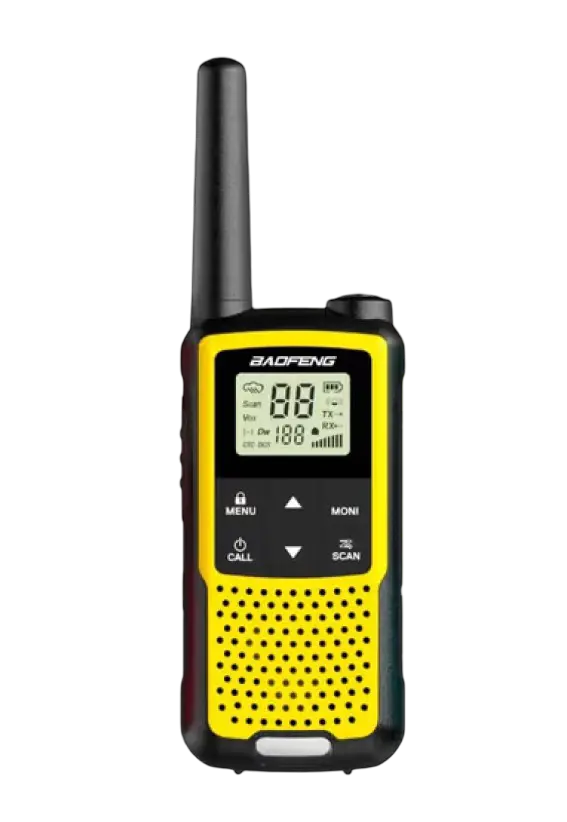 WPC License
1) Why regulation matters for walkie talkies in IndiaTwo-way radios transmit radio frequency (RF) signals that can interfere with other users—aviation, emergency services, satellites—if misused. To protect the spectrum, India regulates radios through the Wireless Planning and Coordination Wing (WPC)under the Department of Telecommunications (DoT). In parallel, Central Consumer Protection Authority (CCPA)oversees how products are marketed and sold online, ensuring consumers are not misled.In short:· WPC decides what frequencies and power levels are allowed and who needs a licence.· CCPA decides how radios must be described and sold on e-commerce platf
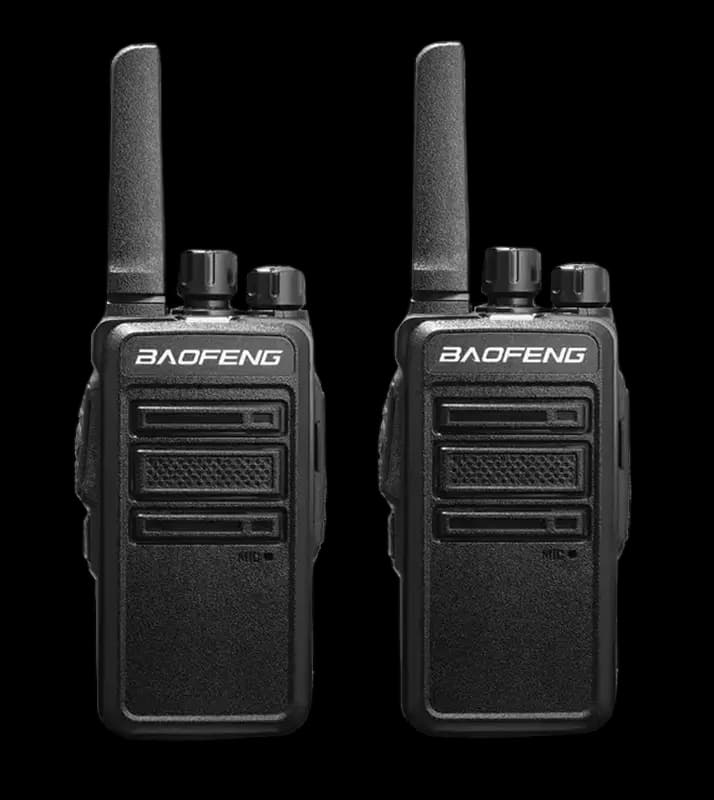 Radio Code
India’s appetite for instant, dependable communication has grown sharply—across security services, logistics, hospitality, construction, events, disaster preparedness, and amateur radio. Walkie talkies (two-way radios) sit at the center of this growth because they work when mobile networks are weak, congested, or unavailable. But in India, radios are regulated equipment. Buying, selling, and using them correctly is not optional—it’s the law.This long-form guide explains Licence-Free vs Licensed walkie talkies in India, with a special focus on BAOFENG products. We’ll break down WPC norms (the technical and licensing rules) and the CCPA guidelines(how sellers must list radios on e-commerce platforms). Whether you’re a buyer, a seller, a distributor, or a marketplace operator, this article is designed to be practical, clear, and up-to-date.
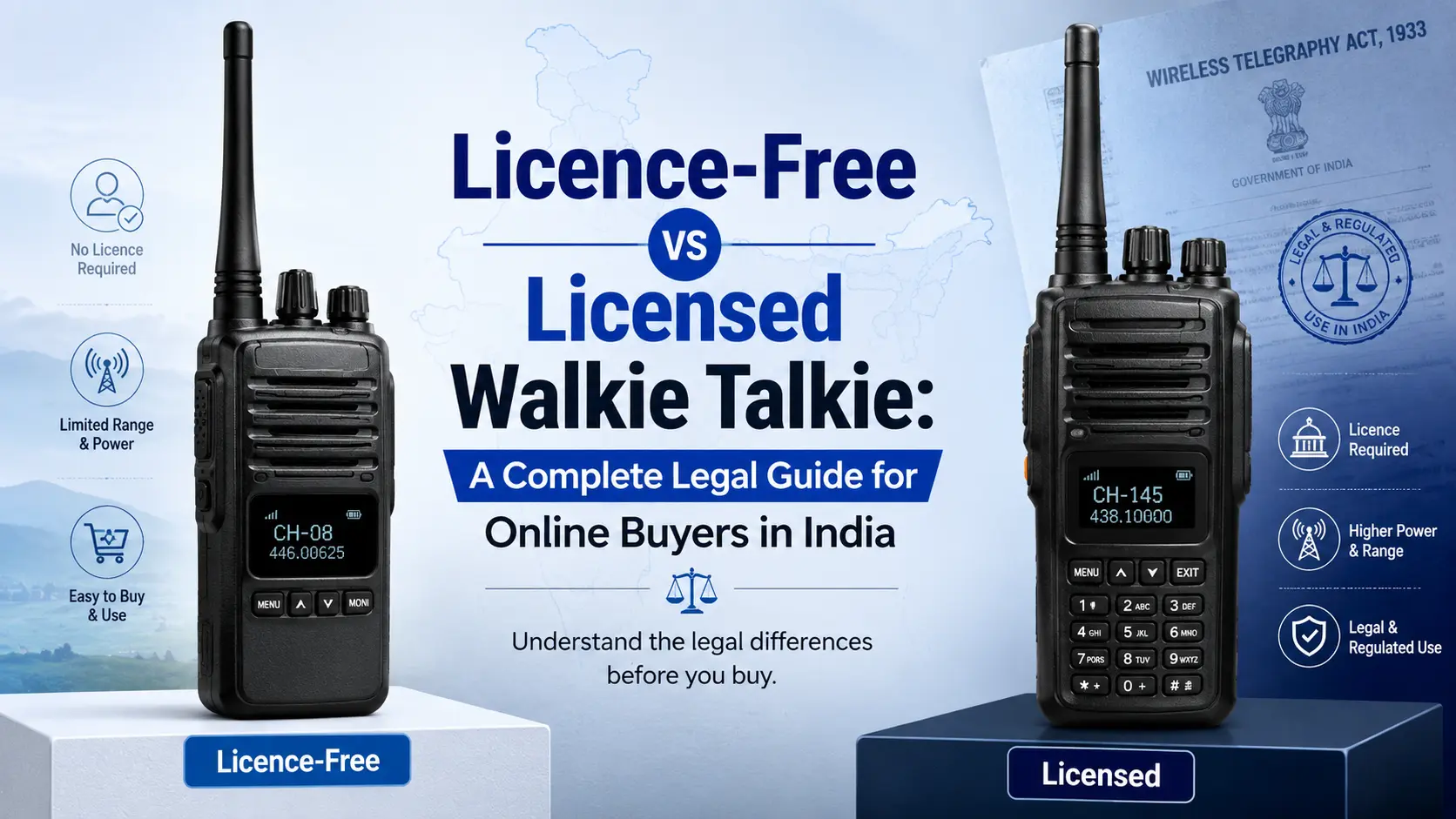 WPC License
A Practical, Guide to WPC Norms and CCPA E-commerce RulesIndia’s appetite for instant, dependable communication has grown sharply—across security services, logistics, hospitality, construction, events, disaster preparedness, and amateur radio. Walkie talkies (two-way radios) sit at the center of this growth because they work when mobile networks are weak, congested, or unavailable. But in India, radios are regulated equipment. Buying, selling, and using them correctly is not optional—it’s the law.This long-form guide explains Licence-Free vs Licensed walkie talkies in India, with a special focus on BAOFENG products. We’ll break down WPC norms (the technical and licensing rules) and the CCPA guidelines(how sellers must list radios on e-commerce platforms). Whether you’re a buyer, a seller, a distributor, or a marketplace operator, this article is designed to be practical, clear, and up-to-date.=========================================================1) Why regulation matters for walkie talkies in IndiaTwo-way radios transmit radio frequency (RF) signals that can interfere with other users—aviation, emergency services, satellites—if misused. To protect the spectrum, India regulates radios through the Wireless Planning and Coordination Wing (WPC)under the Department of Telecommunications (DoT). In parallel, Central Consumer Protection Authority (CCPA)oversees how products are marketed and sold online, ensuring consumers are not misled.In short:· WPC decides what frequencies and power levels are allowed and who needs a licence.· CCPA decides how radios must be described and sold on e-commerce platforms.Understanding both is essential.=========================================================2) What is a walkie talkie (two-way radio)?A walkie talkie is a handheld radio that allows push-to-talk (PTT) voice communication between two or more users on the same frequency/channel. Unlike mobile phones, radios communicate directly—no SIM, no tower—making them invaluable for on-site coordination.There are two legal categories in India:1. Licence-Free radios (very low power, specific frequencies)2. Licensed radios (VHF/UHF bands that require a WPC licence)=========================================================3) Licence-Free walkie talkies in India (the basics)3.1 What “licence-free” really meansLicence-free does not mean “anything goes.” It means no individual user licence is required only if the device strictly follows WPC’s licence-exempt technical limits.3.2 The PMR 446 band (India)Licence-free handheld radios in India typically operate in the PMR 446band:· Frequency: 446.000 – 446.200 MHz· Max power: 0.5 W (500 mW)· Antenna: Fixed / non-removable· Use: Short-range, on-premises communication3.3 Typical use-cases· Retail stores, malls· Hotels, restaurants· Warehouses· Events and exhibitions· Schools and campuses· Small security teams (within premises)3.4 What you cannot do with licence-free radios· You cannot increase power beyond 0.5 W· You cannot use removable or external antennas· You cannot connect to repeaters· You cannot modify firmware to access other bands· You cannot claim “long-range” coverage like licensed radiosAny of the above converts a licence-free device into an illegal transmitter.=========================================================4) Licensed walkie talkies in India (the basics)Licensed radios operate on VHF (136–174 MHz) and/or UHF (400–470 MHz) bands and require a valid WPC user licence before sale and use.4.1 Who needs licensed radios?· Large security agencies· Industrial plants· Infrastructure projects· Oil & gas sites· Disaster management teams· Government contractors· HAM (Amateur) radio operators (with Amateur Radio Licence)4.2 What the licence allowsA WPC licence specifies:· Authorized frequencies· Power limits· Area of operation· Call signs / usage conditionsOperating outside licence terms is illegal—even if you own the hardware.=========================================================5) BAOFENG radios: where they fitBAOFENG is globally known for both licence-free and licensedradios. In India, BAOFENG products are used across business, security, and amateur radio communities—but the model matters.· Licence-Free examples: PMR-only models configured at 0.5 W with fixed antennas· Licensed examples: Dual-band VHF/UHF handhelds (e.g., professional and HAM radios)The same brandcan sell both categories—the legal difference is the model configuration and documentation, not the logo.=========================================================6) WPC norms in detail (what buyers and sellers must know)6.1 Frequency compliance· Licence-free radios must be locked to 446.0–446.2 MHz· Licensed radios must be programmable only to licensed frequencies6.2 Power compliance· 0.5 W max for licence-free· As per licence for VHF/UHF radios (often 4–5 W handheld)6.3 Antenna rules· Licence-free: non-removable antenna only· Licensed: detachable antennas allowed only as per licence6.4 Equipment Type Approval (ETA)Many radio devices require ETA (Equipment Type Approval) or proof of compliance before sale. Sellers must maintain proper documentation.6.5 Serial number traceabilityWPC compliance is strengthened when devices carry unique serial numbersmapped to brand and supply chain. This helps prevent illegal resale and modification.=========================================================7) The most common violations (and how to avoid them)· Selling licensed radios as “licence-free” → Illegal· Advertising exaggerated range for PMR radios → Misleading· Shipping radios with unlocked firmware → High risk· Using detachable antennas on licence-free models → Illegal· Selling licensed radios to buyers without licence → IllegalAvoidance strategy: Clear categorization, transparent listings, and buyer verification.=========================================================8) CCPA guidelines for selling walkie talkies on e-commerceThe Central Consumer Protection Authority (CCPA) focuses on truthful advertising and consumer protection. For walkie talkies, this has direct implications.8.1 Mandatory disclosures in listingsE-commerce product pages must clearly state:· Licence-Free or Licensed· Frequency band· Power output· Licence requirement (if any)8.2 Prohibited claims· Calling licensed radios “licence-free”· Claiming “unlimited range”· Hiding licence requirements in fine print· Using vague phrases like “government approved” without context8.3 Category separationMarketplaces are expected to:· Separate Licence-Free and Licensedcategories· Apply buyer acknowledgement for licensed radios· Remove misleading listings upon complaint8.4 LiabilityCCPA can hold:· Sellers· Brands· Marketplacesliable for misleading claims.=========================================================9) How to correctly sell BAOFENG walkie talkies online (best practice)9.1 For licence-free BAOFENG models· Clearly label: “Licence-Free (PMR 446)”· Mention: 0.5 W, fixed antenna, short-range· Avoid range exaggeration· Include WPC disclaimer9.2 For licensed BAOFENG models· Clearly label: “Licensed Radio – For WPC Licence Holders Only”· Add a mandatory checkbox at checkout· Request licence details for B2B sales· Disable casual consumer marketing language=========================================================10) Warranty, serial numbers, and complianceStrong compliance includes:· Mandatory warranty registration on official portals· Serial number verification· Warranty denial for modified or de-licensed devicesThis discourages illegal trade and protects genuine buyers.=========================================================11) HAM radio users in India (special note)HAM (Amateur) operators require an Amateur Wireless Licence. HAM radios:· Are licensed devices· Can operate on allocated amateur bands· Must follow call sign and operating disciplineSelling HAM radios as consumer gadgets is not allowed.=========================================================12) Buyer’s checklist (before you purchase)· Is the radio Licence-Free or Licensed?· What frequency and power does it use?· Does it have a fixed antenna (for licence-free)?· Do you hold a WPC licence (if required)?· Is the seller transparent and compliant?=========================================================14) The future of walkie talkie regulation in IndiaIndia is tightening spectrum governance:· More marketplace enforcement· Stronger serial tracking· Higher penalties for misleading ads· Better consumer awarenessBrands and sellers who invest in compliance today will win trust tomorrow.=========================================================15) Final thoughts: choose right, sell right, use rightLicence-free and licensed walkie talkies both have a place in India—but they are not interchangeable. Understanding WPC norms and CCPA e-commerce guidelines is no longer optional. It’s the foundation of lawful, sustainable business and responsible use.Whether you’re choosing a BAOFENG licence-free radio for a hotel, or a licensed VHF/UHF radio for industrial operations, make the decision with clarity. Compliance protects you, your customers, and the airwaves we all share.